

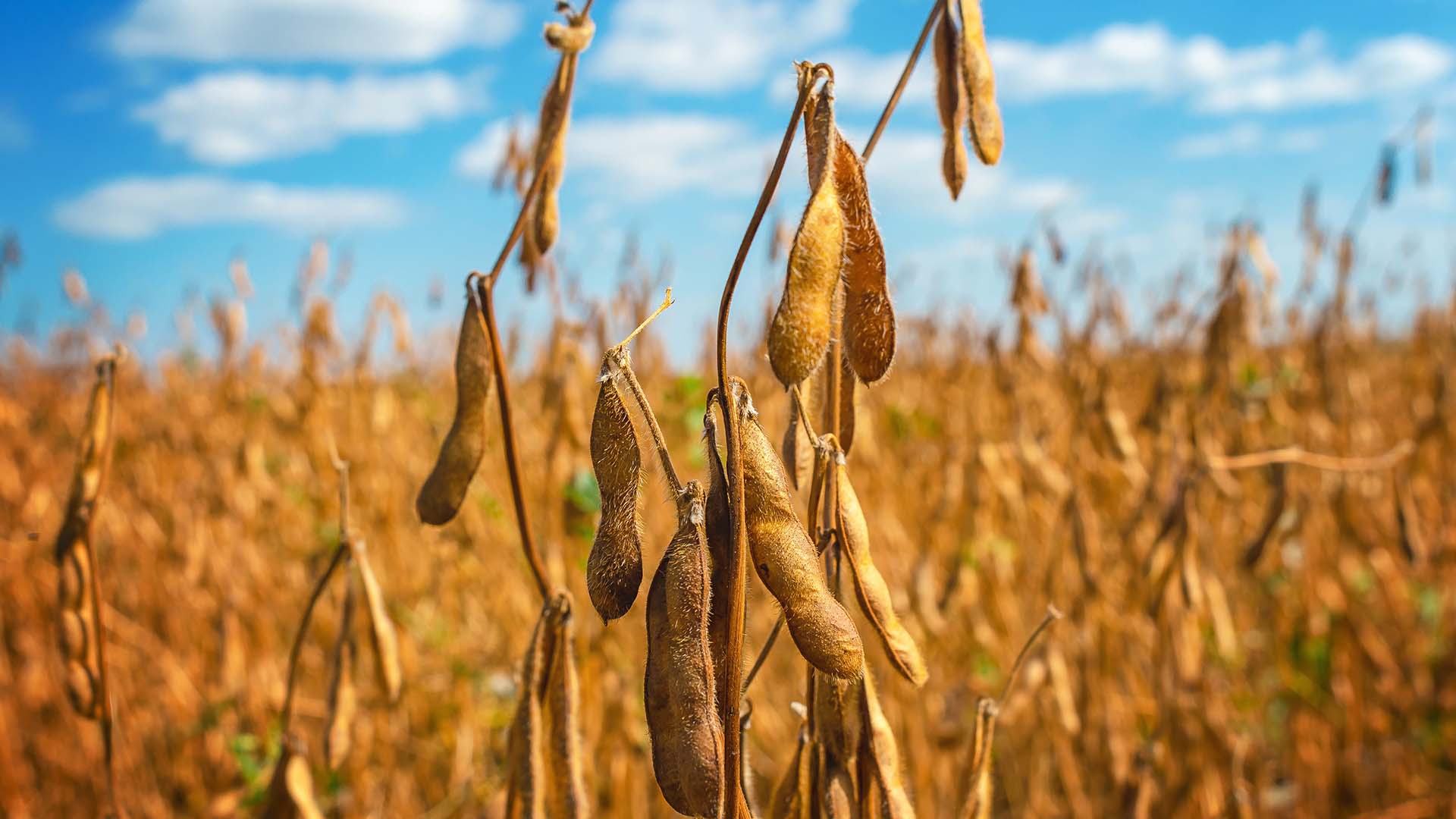

Brazil’s soy prices are trading at the lowest level for this time of the year in at least five seasons as a stronger currency adds pressure from a record harvest, worsening financial strains across the world’s largest soybean exporter.
The Brazilian real has appreciated roughly 12% against the dollar this year, nearly wiping out an 11% increase in Chicago soybean futures and limiting gains in the domestic market at a time when growers typically speed up sales to improve cash flow and pay debts due between April and May.
“The real appreciation reduced competitiveness and limited any more significant pass-through from international prices into the domestic market, consolidating an environment of low prices precisely when farmers need liquidity the most,” said Marcos Rubin, chief executive officer of market intelligence firm Veeries.
The weak pricing environment comes at a particularly sensitive moment for Brazil’s farm sector. Most financing obligations tied to the 2025/26 soybean crop are due on April 30 —payments that are often renegotiated or rolled into later months. With prices under pressure, concerns over delinquencies in the agricultural sector have risen.
“In my opinion, defaults will continue to be a problem this year,” Rubin said. “It’s the fourth consecutive year of compressed margins for soybean farmers.”
The deteriorating economics are beginning to ripple through the supply chain, especially in fertilizers, one of the largest cost items for Brazilian growers. Farmers’ purchasing power for fertilizers has fallen to the weakest level in two decades, according to agribusiness consultant Carlos Cogo.
During the supply disruptions triggered by the Russia-Ukraine war, fertilizer prices also surged sharply, particularly for potash. At the time, however, elevated grain prices helped preserve farmers’ purchasing power, Cogo said.
“The current situation is completely different,” he said. “Commodity prices are nowhere near those levels, so the loss in purchasing power is much more severe.”
Cogo’s outlook echoes warnings from Eduardo Monteiro, Brazil country manager at Mosaic, who said in an interview with The AgriBiz last week that the fertilizer industry is facing its most challenging operating environment in at least 25 years as high interest rates and tighter credit conditions curb demand for agricultural inputs.
Brazilian growers still have most of their fertilizer purchases for the next soybean season outstanding. According to Cogo, between 65% and 70% of expected purchases for 2026 remain uncovered, well above normal levels for this time of year.
“Most producers still don’t know what they’re going to do,” he said. “There is already discussion about reducing fertilizer application.”
The fertilizer industry is already preparing for weaker demand, though uncertainty remains over the magnitude of potential cuts and the impact on crop yields if weather conditions deteriorate later in the year.
Market watchers are also monitoring the possible return of El Niño, a climate pattern historically associated with production losses in parts of Brazil. The phenomenon could disrupt rainfall in southern growing regions while increasing drought risks in northern Mato Grosso and the Matopiba region, the new frontier for Brazilian agriculture.
“Brazil has a much stronger history of crop losses during El Niño years than during La Niña years,” Cogo said.
Margins close to zero
The situation is so concerning that even landowners, typically more resilient than tenant farmers because they avoid lease costs, are approaching some of the weakest profitability levels in decades, according to Cogo.
“Landowners are heading toward their lowest margins of the last 20 years relative to their own historical standards,” he said. “Net margins, including depreciation and amortization, are very close to zero.”
Tenant farmers face even greater pressure, contributing to a growing number of lease returns in some regions, he said.
Still, Cogo does not expect a sharp reduction in Brazil’s soybean acreage next season. The country has historically shown little willingness to materially reduce planted area, even during periods of severe financial stress.
“Brazil rarely posts significant declines in soybean area,” he said. “The last notable reduction was in 2006, and even then it was relatively small. I expect only a low single-digit decline.”


