

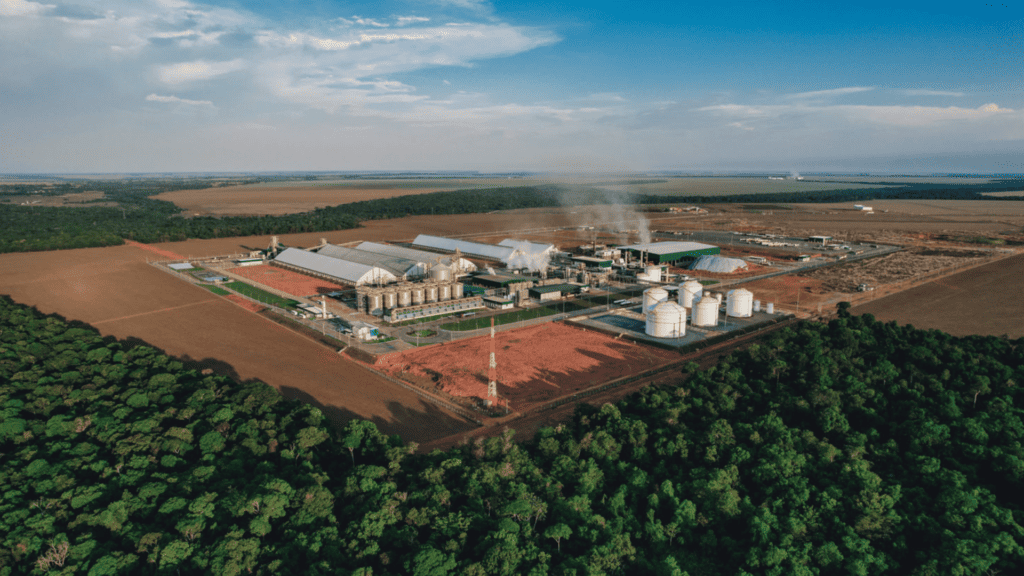

Amaggi, the largest Brazilian-owned commodities trader and a major grain producer, has agreed to acquire a 40% stake in FS, one of the nation’s biggest corn-ethanol companies, which is controlled by U.S.-based Summit Agricultural Group.
The deal was filed with Brazil’s antitrust regulator (Cade) on Tuesday afternoon. The total value of the transaction was not disclosed. The agreement includes a $100 million capital injection through a primary share issuance by FS, according to FS Chief Executive Officer Rafael Abud.
Amaggi is also acquiring stakes from existing shareholders, though the companies declined to disclose the value of the secondary portion of the transaction.
The companies will remain separate, and FS’s management structure will remain unchanged. Amaggi’s participation will be exercised through the board of directors, which has eight seats, although the companies did not disclose how those seats will be divided.
The agreement also establishes exclusivity. Going forward, any investment made by Amaggi in the corn ethanol sector will be carried out through FS.
“For Amaggi, the investment in FS is transformational, as it drives cash-flow growth and further diversifies the company’s businesses,” Amaggi CEO Judiney Carvalho said.
According to Carvalho, the decision to invest in corn ethanol followed extensive studies and broad discussions between management and shareholders.
“Amaggi believes in FS’s market and views this agreement as a unique opportunity to enter the segment, generating value and synergies that justify the investment,” he said.
Petrobras and Inpasa Left Behind
The alliance between Amaggi and FS marks a sharp turn in the trajectory of Brazil’s corn ethanol industry.
Last year, the Maggi family conglomerate announced a partnership with Inpasa to build three corn ethanol plants in Mato Grosso, but the agreement unraveled less than two months later due to disagreements.
FS also nearly followed a different path. The company came close to a deal to sell a minority stake to Petrobras, though negotiations later cooled.
“For FS, it is a major opportunity to have a partner with such deep experience in Brazilian agribusiness,” Abud said.
Expansion Plans
With Amaggi entering its shareholder base, FS gains a powerful partner to continue expanding.
The company is currently building its fourth ethanol plant in the municipality of Campo Novo do Parecis, scheduled to start operations by the end of 2026. FS also owns two additional sites in Mato Grosso, allowing it to expand to as many as six plants, although no timeline has been set.
Another major project expected to start operations in September is a carbon capture and storage unit at the company’s Lucas do Rio Verde complex, also in Mato Grosso. The project would make FS the world’s first carbon-negative fuel producer.
For now, the company’s expansion plans remain unchanged, according to Abud, who said decisions on new investments will continue to respect FS’s cash flow generation and leverage levels.
Amaggi, the largest Brazilian-owned grain trader and one of the country’s largest agribusiness companies, with annual revenue exceeding 40 billion reais, is expected to bring additional commercial and operational expertise to FS.
“We will have several opportunities for collaboration in areas such as corn origination, trading, logistics and biomass,” Abud said.
Despite the expected synergies, the companies do not have any pre-arranged agreement for corn purchases and sales. Corn accounts for roughly 80% of FS’s production costs. According to Abud, any future commercial transactions between the two companies will follow market conditions.
FS generates nearly 13 billion reais in annual revenue, with EBITDA of approximately 3.5 billion reais — implying a margin of 26.7% — based on financial results for the twelve months ended in December.
In a recent report that now appears almost prophetic, analysts at BTG Pactual said a potential monetization of the controlling shareholder’s stake could unlock significant value for FS by reducing leverage and accelerating investments. At the end of December, the company’s net debt stood at 9.5 billion reais, equivalent to 2.76 times EBITDA.


