

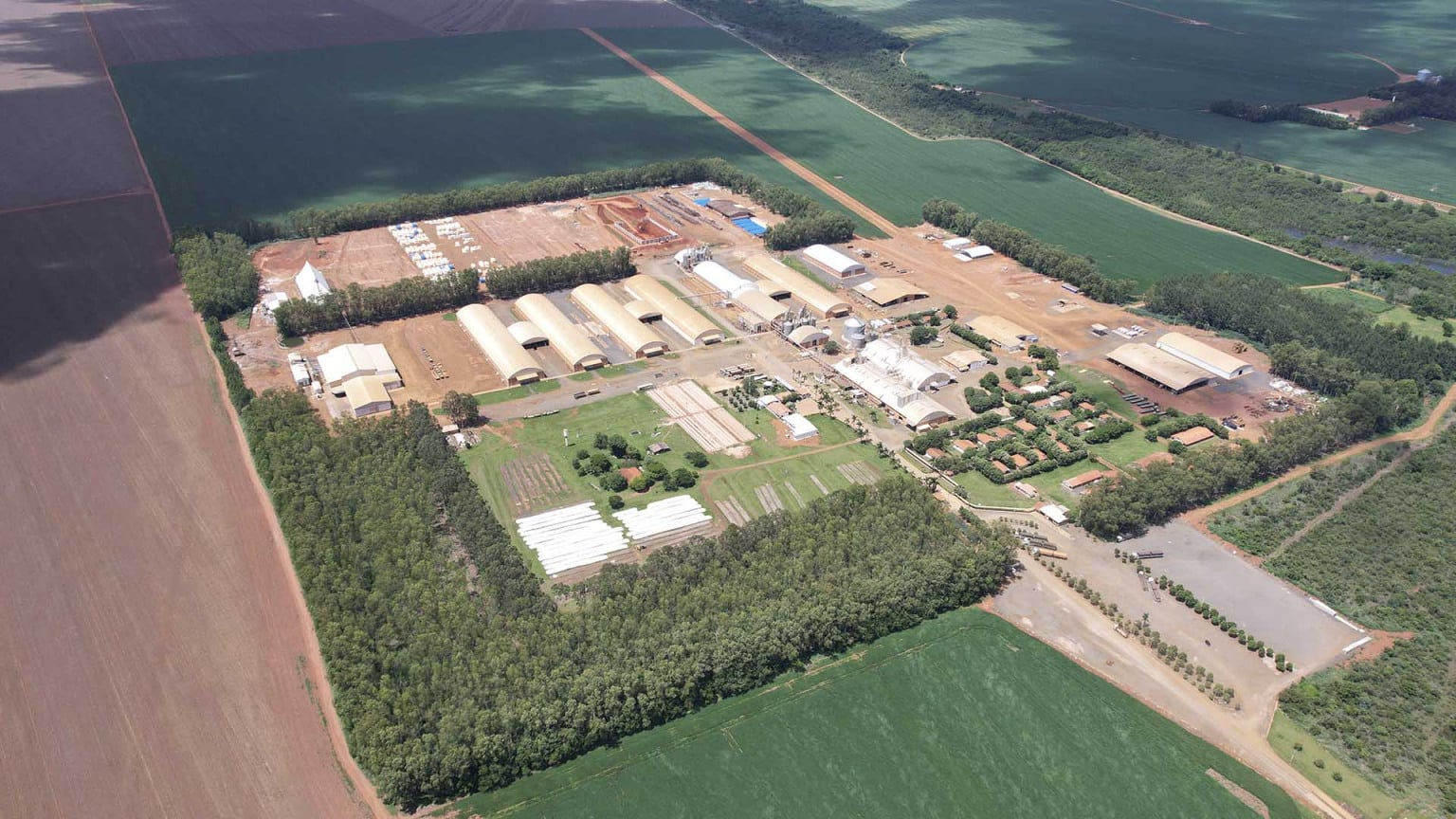

RONDONÓPOLIS, Brazil — Petrovina, a Mato Grosso-based seed producer, has brought Brazil’s first carbon-zero soybean seed to market, betting that sustainability can pay off even as margins across the seed industry stay thin.
The company unveiled the seed to about 300 farmers at four events in Mato Grosso last week, the first step toward a goal of having it account for 20%-25% of total sales within three years.
Petrovina sold 1.3 million 60-kilogram bags last season, grown across 15,000 hectares of its own land and another 85,000 hectares farmed by long-term contract partners. The carbon-zero variety will be sold under the Prime and Prime Tech lines — Petrovina’s top-tier products, with germination rates above 95%, versus a 90% market standard — at no price premium to those categories.
The launch caps three years of work mapping sustainable practices across the business, an effort CEO Celso Fugolin described as guided by “brain, heart and pocket.” Even without a price premium, he said, the push pays for itself through fewer accidents, better employee retention and stronger ties with local communities.
Petrovina’s sustainability drive began with an effort to measure its own carbon footprint to qualify for RTRS certification, a European standard confirming soy and corn are grown without deforestation. That investment — covering the company’s 15,000 owned hectares — paid for itself within three years and now generates roughly R$900,000 to R$1 million (about US$175,000-$195,000) a year in carbon credits.
From there, Petrovina began tracking its emissions under the GHG Protocol, audited by SGS, and started buying carbon credits to offset its debits — while committing to periodically cut its own emissions further.
Convincing farmers to buy in is the harder task, Fugolin acknowledged, since the seed carries no immediate financial upside. “It’s a path that may look distant or futuristic today, but we’re aware that in five years it will be a basic condition for staying in the market,” he said, drawing a parallel to how certification reshaped Brazil’s cotton exports. “I think the same will happen with other commodities.”
A hub for services
The launch is part of a broader push to emerge stronger from a downturn that has hit Brazil’s seed industry hard: sector Ebitda margins fell to 10.6% in the 2025/26 season from 31% in 2022/23, with only a modest recovery to around 15% expected this year.
Fugolin argues seed companies need to reposition themselves as hubs for products and services, not just seed suppliers. “A carbon-zero, traceable seed is a differentiator. Extending credit to farmers is a differentiator. Cold-chain distribution close to the farm is a differentiator. A 40-year-old company is a differentiator,” he said.
Petrovina posted gross revenue of about R$542 million (roughly US$105 million) last season and extended R$100 million (about US$19 million) in credit to the farmers it supplies — mostly long-standing clients — with a delinquency rate around 0.5%.
Fugolin also called for a review of the seed production quotas set by breeders such as market leader GDM, arguing they fueled an oversupply crisis: while soybean planting area grew 2%-3% annually in recent years, quotas rose roughly 30%, flooding the market beyond actual demand.
The journalist traveled at Petrovina’s invitation. This story was translated with the assistance of artificial intelligence.


