

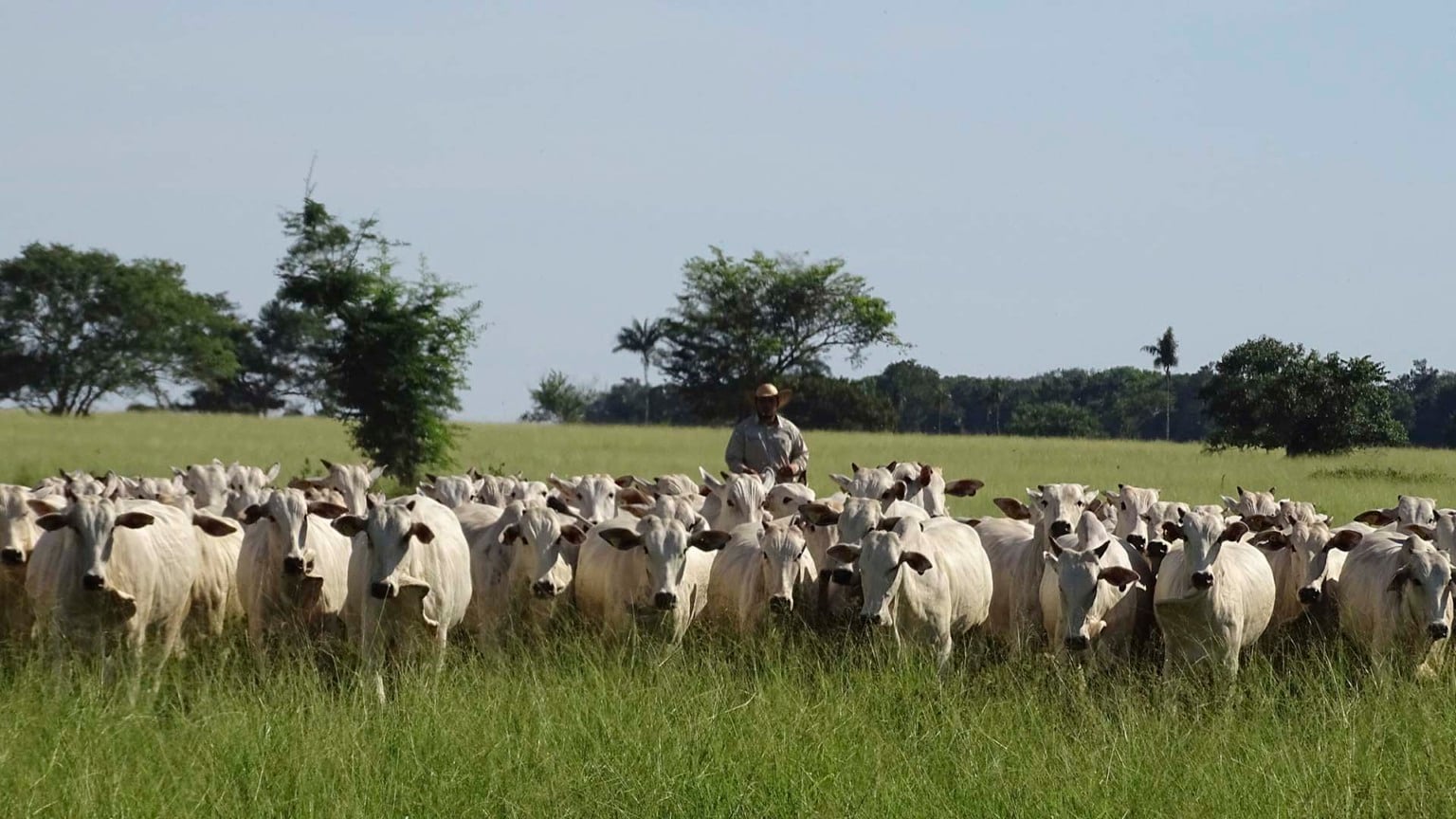

Cocamar, one of Brazil’s largest grain cooperatives, is expanding into cattle production, using crop-livestock integration and branded meat sales to deepen ties with farmers and capture higher margins.
The Maringá-based cooperative expects the business to generate $29.6 million (150 million reais) in revenue in 2026. That remains a small share of Cocamar’s $2.27 billion (11.5 billion reais) in total revenue last year, but the operation is already producing margin gains and commercial synergies, said Renato Watanabe, the cooperative’s superintendent of member relations.
Cocamar plans to recruit more cattle ranchers as members and is preparing a pilot outsourced feedlot program. It is also studying cattle genetics and financing structures tied to future animal deliveries.
The expansion is unusual in Brazil, where agricultural cooperatives have historically been stronger in crops than in cattle. Cocamar itself began with coffee before grains became its main business.
Crop-Livestock Integration
Cocamar’s involvement in cattle dates to the late 1990s, when it created a pasture-restoration program. The initiative sought to make farming viable in a region spanning more than 100 municipalities in northwestern Paraná state, in Brazil’s southern. Its sandy, nutrient-poor soils had largely limited farmers to low-productivity, extensive cattle ranching.
Working with research institutions and Maringá State University, Cocamar promoted crop-livestock integration among about 200 producers.
The practices included planting brachiaria grass alongside safrinha corn, the second crop planted on the same land after the soybean harvest. The grass improves soil cover, root development and nutrient cycling, while cattle graze the fields before the next planting cycle and provide natural fertilizer.
The system also helps control erosion on the region’s sloping, sandy terrain, Watanabe said.
“Agriculture became a necessary part of making cattle production more efficient,” he said. “Soybeans stopped being the end goal and became a way to balance the farm’s economics.”
Cattle that previously gained about 200 grams a day in summer and lost 100 grams during winter began gaining 500 to 600 grams a day, Watanabe said. Slaughter age fell to about two years from four.
Branded Beef
Cocamar later began helping ranchers negotiate with meatpackers. Under a program involving 150 cooperative members, Cocamar employees inspect carcasses at processing plants to verify grading and ensure farmers receive quality premiums — or an explanation when those premiums are denied.
The service addressed ranchers’ longstanding mistrust of meatpackers, Watanabe said. Some ranchers preferred selling live cattle because they doubted the yield and grading reported after slaughter.
In 2023, Cocamar began processing cattle through a partnership with FrigoMendes, a local meatpacker. It created three proprietary beef brands sold at cooperative stores and through retailers and restaurants. The initiative was driven by rising demand for premium cuts and the growth of specialized butcher shops and steakhouses.
Cocamar expects about 17,000 cattle to be slaughtered through the program this year. Roughly half will be processed by FrigoMendes and sold under Cocamar’s brands, while the remainder will go to customers that market the beef under their own labels.
The volume is marginal compared with JBS, MBRF and Minerva, which process millions of cattle annually, but it allows Cocamar to target specialized domestic niches.
Feedlot Pilot
Cocamar’s next step is an outsourced feedlot service known in Brazil as “boitel”.
The cooperative will manage fattening, infrastructure, nutrition and animal health at farms, while ranchers pay according to the amount of dry matter consumed. The model is aimed at producers who lack the facilities, technical expertise or cash flow to operate their own feedlots.
“To confine 150 animals, the rancher needs to have produced silage or purchased feed at a favorable price,” Watanabe said. “Sometimes the producer does not have that expertise. We act as a technical facilitator.”
The first round, involving 300 cattle, is scheduled for the Brazilian winter. Cocamar may invest in its own feedlot if the pilot succeeds.
The cooperative is also considering entering the cow-calf segment, using findings from a cattle-genetics study launched with Maringá State University in 2025.
Another plan would allow ranchers to buy feed and other inputs against a commitment to deliver cattle later, reducing the need for upfront cash.
With slaughter volumes and producer costs known in advance, Cocamar could hedge cattle prices and deduct input expenses from the final payment, Watanabe said.
This story was translated from the original Portuguese with the assistance of artificial intelligence and reviewed by The AgriBiz editorial staff.


