


Ruiz Coffees is considering farm sales and transactions that would transfer land to investment funds while allowing the company to keep operating the properties, as one of Brazil’s largest coffee growers seeks to restructure debt estimated at more than $196 million (1 billion reais).
Chief Financial Officer Ricardo Prado said the group’s liquidity crisis stemmed from a concentration of debt maturities and an abrupt loss of access to refinancing, rather than from weak profitability in its coffee business.
“The central issue was the combination of a concentrated maturity profile and the sudden interruption of credit rollovers,” Prado said in a written interview with The AgriBiz.
The cash squeeze temporarily forced Ruiz to reduce some fertilizer applications, hurting farm productivity, Prado said. He declined to disclose the company’s debt, cash, leverage or earnings.
Ruiz is negotiating with creditors including funds managed by Suno, Galápagos and Vectis. It aims to reach a consensual restructuring and avoid a Brazil’s court-supervised reorganization process, broadly similar to a Chapter 11 filing.
A court order granted on June 29 suspended debt payments for 60 days, giving the company until late August to negotiate with creditors. Prado said Ruiz expects to have agreements completed or at an advanced stage by the end of that period.
The company is seeking longer maturities from banks and credit cooperatives, revised terms with suppliers and capital-markets investors, and tighter financial governance, he said.
Land Options
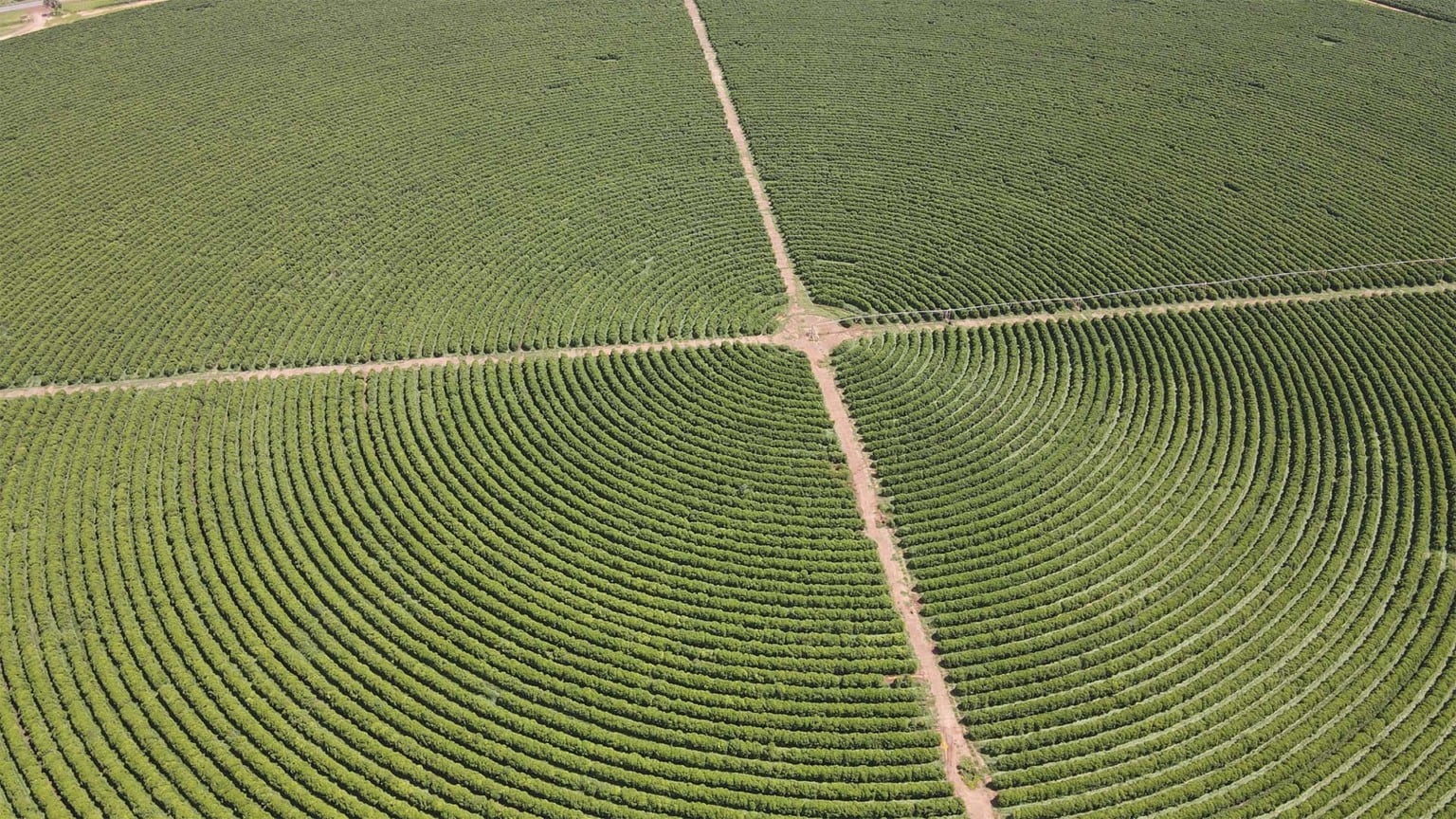
Ruiz grows coffee on about 9,000 hectares (22,230 acres), most of it on company-owned land in Minas Gerais and Bahia states. Its total operated area is larger because it also includes other crops and support areas.
Some properties secure rural-credit and capital-markets obligations through liens, Prado said, declining to identify individual creditors because the contracts are confidential.
The company is considering contributing land to an investment vehicle controlled by creditors, with Ruiz retaining the properties through land leases and potentially receiving an option to buy them back. No decision has been made on the vehicle, participants, valuations, lease terms or repurchase conditions, he said.
Farm sales are also under consideration as a way to reduce leverage.
Ruiz has historically generated returns both from agricultural production and from buying and selling rural properties, Prado said. The company remains open to selling mature investments or other assets when doing so would strengthen its capital structure.
Some previously agreed farm purchases were unwound after expected funding failed to materialize, he said.
“The willingness to reverse transactions agreed under assumptions that did not materialize is a sign of discipline, not weakness,” Prado said. He declined to disclose whether Ruiz paid penalties when the deals were canceled.
The group’s priority under any proposed structure is to retain operational control of its productive land, he said.
Coffee Prices
Ruiz’s financial difficulties emerged even as coffee prices and industry margins climbed to their strongest levels in years.
The company did not capture the full benefit of that rally because part of its crop had already been priced through forward-sale contracts signed before the price increase, Prado said. Some deliveries were also rescheduled across crop years, extending the effect of the earlier pricing into the current season.
Higher interest rates, reduced availability of rural credit and weather-related damage to Brazilian coffee yields also contributed to the pressure, he said.
A profitable agricultural operation can still face a liquidity crisis when debt maturities fall within a short period and refinancing disappears, Prado said.
Ruiz does not hedge coffee through ICE futures or other derivatives and has not faced margin calls, according to the CFO. Instead, it uses forward contracts negotiated directly with commodity traders, fixing prices, volumes and delivery dates without exchange-based margin requirements.
The company is evaluating alternative price-protection strategies that could preserve exposure to rising prices without creating unpredictable cash demands. No new structure has been contracted, Prado said.
Ruiz declined to disclose whether any forward deliveries had resulted in washouts or other financial settlements. Rescheduling deliveries between seasons is common in the industry and is negotiated separately with each buyer, the company said.
Farm Spending
Weather conditions affected Ruiz’s productivity in the 2025/26 season, while liquidity constraints also led to temporary reductions in crop applications, Prado said.
Those cutbacks had a further impact on yields, making the financial restructuring critical to restoring adequate crop management and funding the 2026/27 production cycle.
The group continues to harvest and process coffee normally but does not disclose production or yield figures by season, he said.
Ruiz employs more than 500 people and has not made layoffs, Prado said. Payroll remains current, and obligations to suppliers supporting the ongoing harvest are being paid normally, he added.
The company declined to comment on a reported cash balance of about $11.7 million (60 million reais), saying the court protection was intended to preserve operating liquidity while negotiations continued.
This story was translated with the assistance of artificial intelligence and reviewed by The AgriBiz editorial staff.


