

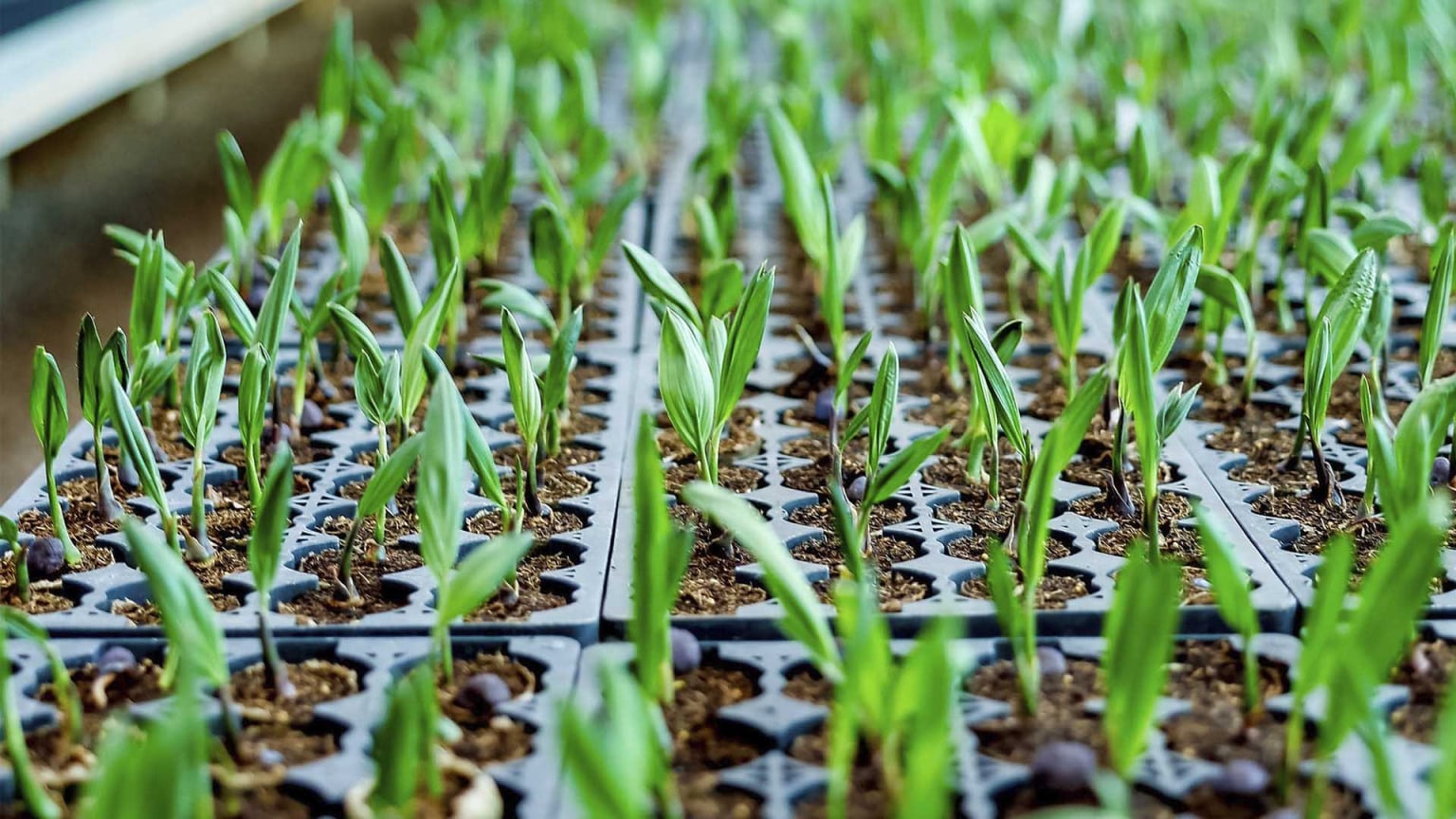

Mubadala-backed Acelen Renováveis is betting on Brazil’s native macaúba palm to make sustainable aviation fuel (SAF) commercially competitive with fossil jet fuel. The company is building an integrated supply chain around the high-oil-yield crop that it hopes will position Brazil as a leading global supplier of the low-carbon fuel.
Native to Brazil and adapted to multiple biomes, macaúba stands out for its resilience in semi-arid regions and its oil productivity, which the company says is about 10 times higher per hectare than soybeans. Although the species has been studied by Brazilian researchers for decades, it has seen little commercial development until now.
The company plans to build a biorefinery in São Francisco do Conde, in Bahia state, adjacent to the Mataripe refinery acquired from Petrobras in 2021. At full capacity, the facility is designed to produce up to 1 billion liters (264 million gallons) per year of either SAF or hydrotreated vegetable oil (HVO), a renewable diesel chemically identical to fossil diesel and compatible with existing engines.
Betting on Decarbonization
Demand for SAF is expected to accelerate as aviation decarbonization mandates take effect around the world.
Brazil’s legislation requires airlines to reduce emissions by using SAF, starting with a 1% target in 2027 and increasing by one percentage point annually until reaching 10%. Globally, the aviation industry is targeting 10% SAF use by 2030 and net-zero emissions by 2050.
The industry’s biggest hurdle remains economics. SAF currently costs at least three times as much as conventional jet fuel.
“A long-term solution, beyond mandates and subsidies that are difficult to sustain, requires a feedstock that is scalable, competitive and highly efficient,” Victor Barra, Acelen Renováveis’ Agribusiness Director, told The AgriBiz.
Barra said macaúba meets those requirements while offering additional environmental benefits. The palm can be cultivated on degraded land, of which Brazil has more than 100 million hectares (247 million acres), avoiding competition with food production. The company also expects to benefit from carbon credits once Brazil’s regulated carbon market is implemented.
According to Acelen Renováveis, the project is expected to reduce CO2 emissions by more than 80% compared with fossil fuels while enabling the capture of up to 60 million metric tons of carbon in the soil.
Funding and Infrastructure
The project carries a capital expenditure of $1.5 billion (around 7.6 billion reais).
Part of the investment is being financed by a consortium of 12 financial institutions led by the International Finance Corporation (IFC), the World Bank’s private-sector lending arm, and HSBC, with participation from BNDES, Brazil’s national development bank, and the Inter-American Development Bank (IDB).
Separately, HSBC approved an additional 125 million reais in financing under Brazil’s Eco Invest program to support macaúba plantations.
Construction work is underway, with commercial operations scheduled to begin in 2029. Until macaúba orchards begin producing fruit, expected around 2031, the biorefinery will process used cooking oil and soybean oil. After that, the company plans to transition entirely to macaúba feedstock.
Mubadala Capital, the investment arm of one of the United Arab Emirates’ largest sovereign wealth funds, manages more than $430 billion in assets.
Although the group maintains investments in fossil fuels, it is expanding its renewable energy portfolio, with Brazil expected to remain a strategic destination. The company said about 90% of planned production has already been contracted by customers in the United States, Canada and Europe ahead of startup.
The project also benefits from existing logistics infrastructure through the Madre de Deus terminal, located about 11 kilometers (6.8 miles) from Mataripe. Two new pipelines, an electricity transmission line, a natural gas connection and water infrastructure are planned.
Genetics and Artificial Intelligence
Scaling macaúba commercially requires what Barra describes as the crop’s “domestication.”
To accelerate that process, Acelen Renováveis established Agripark, a research center in Montes Claros, Minas Gerais state, which opened in August 2025 after receiving 314 million reais in investment, including 258 million reais financed by BNDES.
The facility operates through partnerships with Embrapa, Brazil’s agricultural research corporation, universities and research institutes. It houses the company’s germplasm bank, breeding programs and seed-processing facilities, with capacity to produce 1.7 million seeds per month.
Artificial intelligence has become a central tool in the effort.
Working with the State University of Montes Claros, researchers developed an AI-based technology that increased seed germination rates from about 3% in natural conditions to 85%, according to the company.
Another research project is evaluating whether the shell surrounding the kernel can also be converted into SAF feedstock. Meanwhile, an automated robotic system reduced the time required for seed germination processing from 40 seconds to one second.
Agripark currently produces 10.5 million seedlings annually, enough to plant approximately 30,000 hectares (74,100 acres). The nursery period has been reduced from 90 days to 67 days before seedlings are transferred to field nurseries.
The company is also investing in cloning technology, with the first cloned plants expected to be introduced this year.
Forestry-Style Farming Model
The agricultural expansion strategy mirrors Brazil’s pulp and paper industry, combining company-owned plantations with third-party growers.
According to Barra, maintaining proprietary production demonstrates confidence in the project while allowing farmers to diversify their operations. About 30% of suppliers are expected to be small and medium-sized producers.
“Macaúba will complement the crops they already grow,” he said.
The first 10 participating farming families are expected to begin planting in 2027 through a partnership with Cooperiachão. Barra said the company is also in discussions with Sicredi to facilitate rural credit for growers.
The long-term goal is to plant 144,000 hectares (356,000 acres) across Bahia and northern Minas Gerais, organized into as many as five production hubs, each with cultivation, oil extraction and crushing facilities.
So far, the company has planted 644 hectares (1,591 acres) and expects to reach 2,000 hectares (4,942 acres) by the end of 2026.
At the same time, Acelen Renováveis is seeking certification for macaúba under CORSIA, the International Civil Aviation Organization’s carbon offsetting and emissions reduction scheme for international aviation, a step required to enable SAF exports.
This story was translated from the original Portuguese with the assistance of artificial intelligence and reviewed by The AgriBiz editorial staff.


