

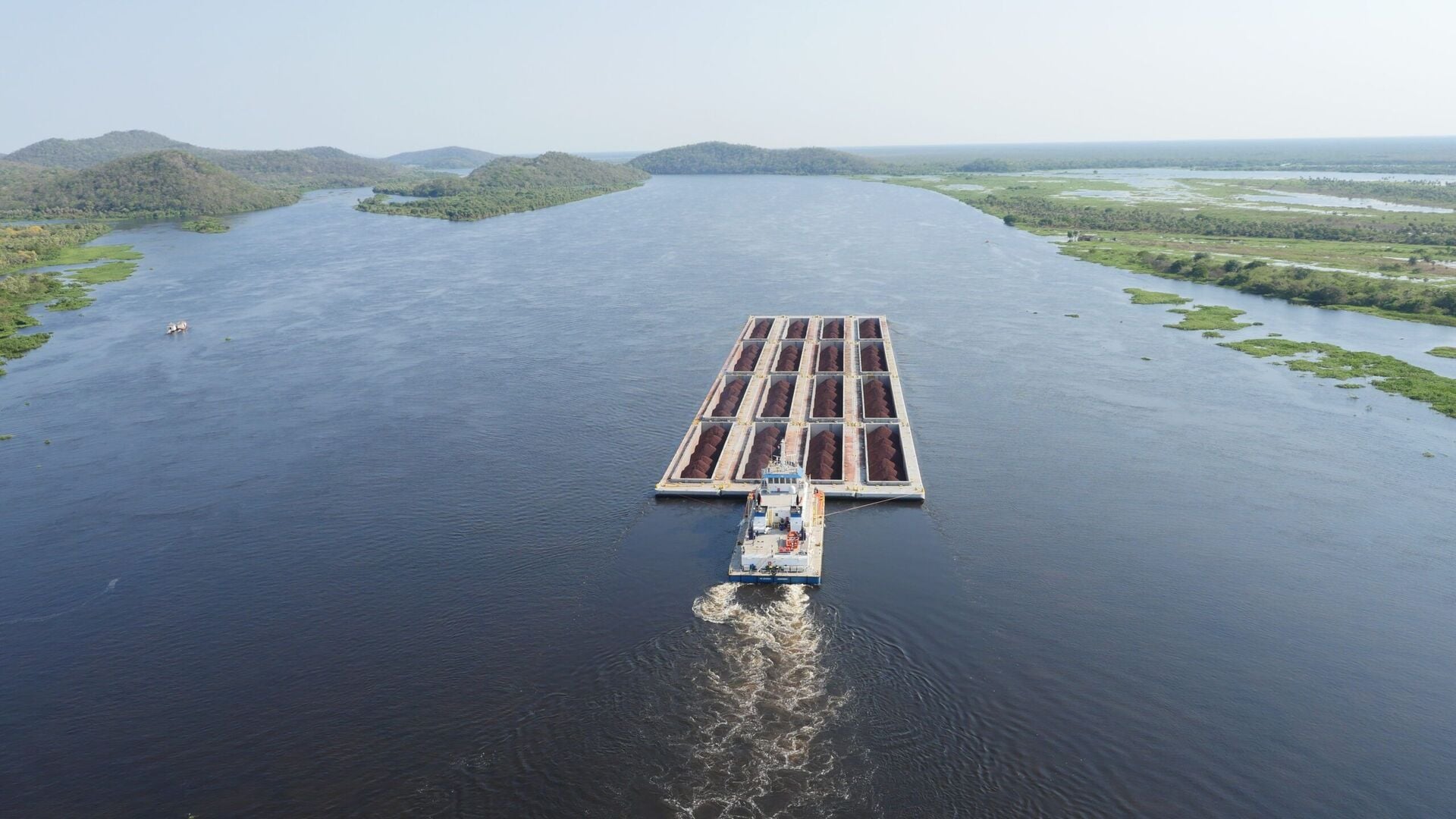

A dispute over dredging Brazil’s Tapajós River could disrupt exports of 3 million to 5 million metric tons of soybeans and other grains and cost the supply chain as much as $164 million (850 million reais), according to MoveInfra, an association representing six infrastructure companies.
The estimate assumes barge traffic is replaced by trucks for three to four months during the Amazon dry season, adding $29 to $48 per metric ton (150 to 250 reais) to freight costs. Heavier road traffic could also delay vessel loadings and expose exporters to demurrage charges.
The Tapajós is a key route in Brazil’s Northern Arc, the network of ports and waterways used to ship farm commodities through the country’s north. Barges carry grain from Miritituba in Pará state to the ports of Santarém and Vila do Conde, with the route handling an average 1.2 million metric tons a month, MoveInfra said.
The dispute pits Indigenous communities against transport companies over a maintenance-dredging project that has stalled following a federal government decision.
The Amazon dry season typically runs from October through February. The prospect of a potentially severe El Niño in the second half of 2026 has heightened concern that low water could halt barge operations.
“To be ready for November and December, the most critical El Niño months, dredging would have to start now,” MoveInfra Chief Executive Officer Ronei Glanzmann said in an interview. “Not doing it means betting the impact will not be that severe. But we could face a crisis like the ones in 2023 and 2024.”
The 2023 El Niño coincided with a severe regional drought that sharply restricted navigation and hurt operators including Hidrovias do Brasil.
Dredging Plan
The proposed maintenance work would remove about 1 million cubic meters of sediment at seven points along the river. One site, about 10 kilometers from a Munduruku Indigenous territory, accounts for 90% of the volume, Glanzmann said.
He said dredging 3 million cubic meters would be preferable, but the industry settled on a 1 million-cubic-meter project after discussions with engineers.
Operators developed the plan with DNIT, Brazil’s federal transport infrastructure agency, the National Waterways Secretariat and Pará’s environmental agency. The waterway companies would finance the work themselves.
Bathymetric surveys have already mapped the riverbed and identified the sandbanks, and a sediment-removal plan has been completed.
“The work would remove only what is strictly necessary to maintain minimum navigability at that point,” Glanzmann said. “There is already a plan, a dredger and funding.”
MoveInfra argues that maintenance dredging does not require an environmental report under Brazil’s 2025 General Environmental Licensing Law. That interpretation has been challenged in court amid the project’s political sensitivity, Glanzmann said.
Legal Challenges
Federal prosecutors in 2025 filed a class-action-style lawsuit against Pará state and DNIT, the agency responsible for approving and overseeing dredging work.
They said the Tapajós project was being planned without adequate environmental licensing or free, prior and informed consultation with affected Indigenous and traditional communities.
Indigenous groups also sought the repeal of Decree No. 12,600/2025, which placed the Madeira, Tocantins and Tapajós waterways in Brazil’s National Privatization Program, known as PND. The measure opened the way for dredging and traffic-control projects on the rivers.
Indigenous leaders from the middle and lower Tapajós have mobilized against the decree since early 2026, including through an occupation of a Cargill grain terminal.
The federal government repealed the decree in February 2026, stalling a DNIT tender to hire a company to carry out the dredging.
Opponents say any project linked to the Tapajós waterway must comply with International Labour Organization Convention 169, which requires free, prior and informed consultation with Indigenous peoples.
Federal prosecutors said Santarenzinho, one of the planned dredging sites, is sacred to the Munduruku. Another site, Tabuleiro do Monte Cristo, contains one of the Amazon’s largest freshwater-turtle sanctuaries and is a nursery for Podocnemis expansa, a threatened Amazon river turtle.
In early July 2026, federal prosecutors recommended suspending the dredging and gave authorities 10 days to respond on whether they would comply.
The recommendation asked Pará’s environmental agency to require adequate licensing, including specific assessments of mercury levels in riverbed sediments. Prosecutors also requested technical documents from DNIT, including its environmental-control report and plan.
This story was translated from the original Portuguese with the assistance of artificial intelligence and reviewed by The AgriBiz editorial staff.


