

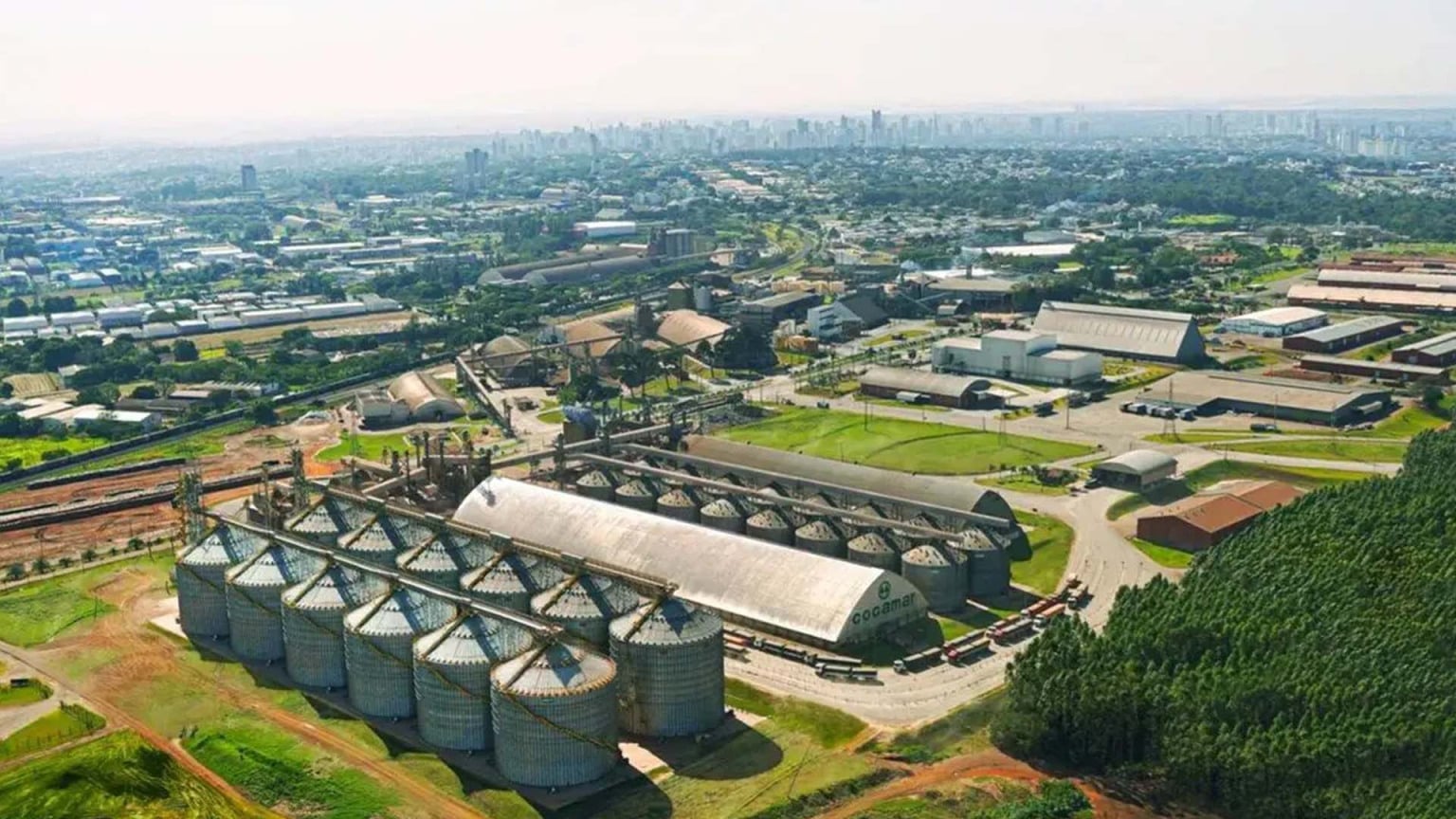

Cocamar, one of Brazil’s largest agricultural cooperatives, is betting on industrial expansion rather than geographic growth as it pursues a strategy to nearly double revenue to between $4.5 billion and $4.9 billion (23 billion-25 billion reais) by 2030.
The Paraná-based cooperative, which posted revenue of about $2.3 billion (11.5 billion reais) in 2025, expects sales to rise to as much as $2.6 billion (13 billion reais) this year. Executives say reaching more than 20 billion reais in annual revenue is essential to remain competitive with the country’s largest cooperatives.
“If we are not among the cooperatives generating more than 20 billion reais in revenue, we will increasingly fall behind the largest players and lose competitiveness,” Renato Watanabe, Cocamar’s superintendent for member relations, told The AgriBiz. “Our board and executive management have a simple motto: grow or die.”
Founded in 1963 as a coffee cooperative, Cocamar now has about 20,000 members. Soybeans and corn account for roughly 60% of revenue, with the remainder coming from sugarcane, wheat, oranges and a growing livestock business.
Processing Expansion
While Cocamar continues to evaluate opportunities to expand its footprint, management sees processing and value-added manufacturing as its main growth engines.
The cooperative is building a new soybean crushing plant at a cost of about $148 million (750 million reais), scheduled to begin operations in the first half of 2027. The investment will increase annual crushing capacity to 2.3 million metric tons from 1 million metric tons.
A second project, the largest capital expenditure planned for the current five-year period, will expand Cocamar’s biodiesel plant in Maringá. The roughly $197 million (1 billion reais) investment, financed by Finep and BNDES, Brazil’s national development bank, is expected to be completed in the second half of 2027.
The expansion will triple biodiesel production by adding 680,000 liters per day to the current 340,000 liters per day, allowing the cooperative to consume as much as 60% of the soybean oil it produces internally, up from about 50% today.
“Industrialization has been what generated returns over the past three years,” Watanabe said.
Cocamar is also revisiting plans to build a corn ethanol plant, supported by its own corn production, which reached 1.9 million metric tons in 2025.
“We already operate in biofuels and understand that market. Producing corn ethanol is a natural extension of what we already do,” Watanabe said.
Despite its expansion plans, Cocamar intends to keep leverage under tight control.
“We are very conservative when it comes to debt. We are not the owners of this business — we are managers acting on behalf of our members. We cannot take excessive risks with their capital,” he said.
Manageable Credit Risks
Brazil’s farm sector has faced rising financial stress over the past two years, with higher defaults affecting banks, agricultural retailers and Fiagros — listed agribusiness credit funds.
Watanabe said the picture among Cocamar’s members remains mixed but manageable.
“The current environment is challenging, but for land-owning farmers in Paraná and Mato Grosso, margins are not that bad. Input-to-output price ratios are no longer as favorable as they once were, but neither are they at their worst,” he said.
Higher fuel, labor and debt-servicing costs have squeezed cash flow, particularly after soybean prices in Paraná fell to about 118 reais per 60-kilogram bag from 180 reais during the pandemic, effectively doubling the soybean volume many producers need to sell to service machinery loans.
Cocamar has been renegotiating debt with financially stressed members while maintaining strict credit standards.
“In regions where we have operated for decades, our loan portfolio remains extremely well controlled because we have always required strong collateral,” Watanabe said. “The greater challenge is in newer expansion areas, where we are still getting to know producers. Our business depends on knowing who should receive credit. A default can have a significant impact on earnings, so it is better to remain conservative.”
This story was translated from the original Portuguese with the assistance of artificial intelligence and reviewed by The AgriBiz editorial staff.


